

Got my backhand back.
Two cortisone shots and 18 months of bracing did nothing. Started Spark in March — within a month I was hitting backhands without flinching for the first time in two years. Not even kidding.
Pain-free at 4 weeks
Code Copied
That stab when you grip the racket. The throb after 18 holes. The ache that ruins your dink shot. Your tendons are inflamed — and ice isn't fixing it. 10 minutes a day with red light therapy can.

Tennis elbow, golfer's elbow, and pickleball elbow are all the same problem in slightly different places — overworked tendons that anchor to the bony bumps of your elbow.
Lateral epicondylitis
Pain on the outside of your elbow. Triggered by repeated wrist extension — backhands, gripping, lifting with your palm down.
Outer elbow painMedial epicondylitis
Pain on the inside of your elbow. From wrist flexion and gripping — a hard swing, a fat shot, throwing, or hammering.
Inner elbow painMixed lateral / medial
The fast wrist snap of dinks, drives, and resets fires both sides of the elbow. The fastest-growing tendinopathy in any sport.
Both sidesMost people blame their swing. Their grip. Their paddle. The real culprit is way smaller — and it's why ice, rest, and braces aren't getting you back on the court.

Where your wrist extensor tendons attach. The home of tennis elbow.
Where your wrist flexor and pronator tendons attach. The home of golfer's elbow.
Unlike muscle, your tendons have minimal circulation. That's why a torn quad heals in weeks but a strained elbow tendon can drag on for months — or years.
Every time you pronate (palm down) or supinate (palm up) under tension — that force concentrates at the tendon's bony attachment in the elbow. Thousands of reps later, microscopic tears stack up.
Without proper repair signals, the body lays down disorganized scar tissue instead of strong tendon. The area stays inflamed, weak, and pain-sensitized — sometimes for years.
Your forearm has two key motions: pronation (palm down) and supination (palm up). Almost every racket sport, golf swing, or paddle stroke is a violent version of one or both.
The muscles that drive those motions don't attach in your forearm. They anchor up at your elbow — at the two bony bumps called the epicondyles.
Pick a stretch. Hit start. We'll count the rounds. Do them daily — twice if you played that day.

Extend your arm straight in front of you, palm facing down. With your other hand, gently pull your fingers and hand down and toward you until you feel a stretch along the top of your forearm. Keep your elbow straight.
Red and near-infrared light at the right wavelengths — 660nm and 850nm — penetrate skin and soft tissue to reach the inflamed tendon. Inside the cells, light triggers your mitochondria to produce more ATP, which speeds tissue repair. It also dilates local capillaries, finally bringing oxygen and nutrients to a notoriously low-blood-flow structure.
Photobiomodulation for lateral and medial epicondylopathy is supported by peer-reviewed clinical research published in journals including Lasers in Medical Science and the British Journal of Sports Medicine.
Tendons heal slowly. Knowing what to expect at each stage is what keeps people from quitting at week 1. Drag through the timeline.
A simple daily routine that combines targeted stretching with red light therapy where it counts. Designed for tennis elbow, golfer's elbow, and pickleball elbow.
Best done after activity, or in the evening before bed.
10 wrist circles each direction. 10 slow pronation/supination rotations. Loosen the tissue before treatment.
Position Spark or Beam 6 inches from the affected epicondyle (outer for tennis, inner for golfer's, both for pickleball). Stay still. Let the light do the work.
Slide the panel down to cover the meatiest part of your forearm — that's where the tension feeding the tendon actually lives.
30-second wrist extensor stretch (tennis side) or wrist flexor stretch (golfer's side). Lock the gain in.
Two cortisone shots and 18 months of bracing did nothing. Started Spark in March — within a month I was hitting backhands without flinching for the first time in two years. Not even kidding.
My PT recommended I look into red light therapy after my golfer's elbow stalled out. Bought the Spark on a whim. Six weeks later I played 18 holes pain-free for the first time since 2022. Buy. The. Thing.
Pickleball wrecked my elbow. Wore a brace for a year and still couldn't dink without wincing. Got the Beam because both sides hurt. Five weeks in I realized I'd left my brace in the drawer for three days. That was when I knew.
Doctor wanted to give me my third cortisone injection. I told him I'd try the red light first. He said good luck. Eight weeks later I went back and told him I didn't need the shot. He asked which device.
My ortho had me on the surgery schedule. My wife begged me to try one more thing. Three months on Beam and I cancelled the surgery. I still play 4x a week. I'm 62 and I've never felt better in my elbow.
I was the one who used to ice my elbow between games. Now I show up early, run 10 minutes with the Spark, and play three sets without thinking about it. My doubles partner asked what changed. Now she's ordering one.
Pick what you've used (or what your doctor offered). See how it actually stacks up against red light therapy on cost, healing, and risk.
Both deliver 660nm + 850nm at clinical irradiance. The difference is coverage area — and how you want to treat.

Compact, handheld, and laser-focused on a single joint. The perfect size for the elbow, with enough power to deliver a full clinical dose in 5–7 minutes.
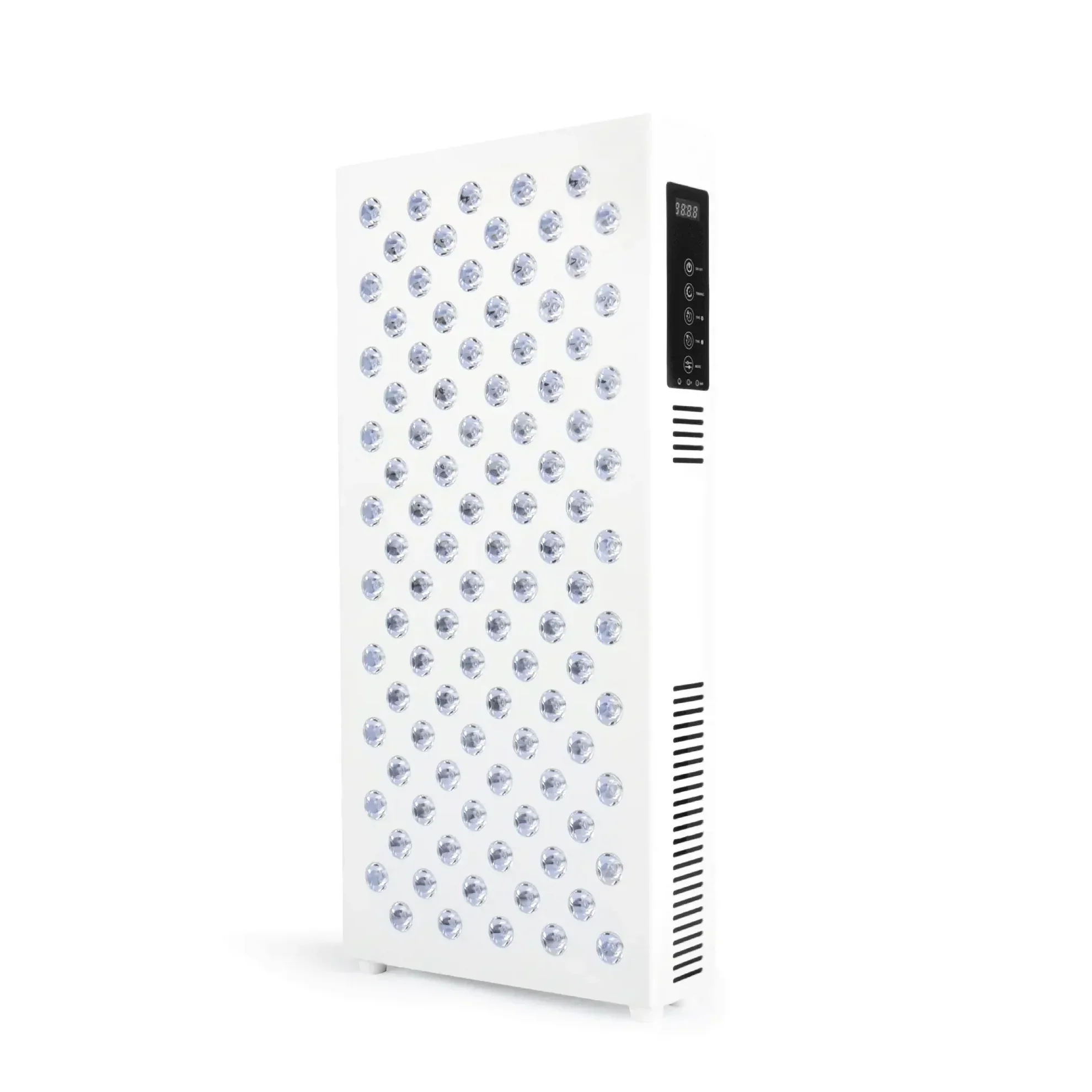
Cover the entire elbow, forearm, and even the shoulder in a single hands-free session. Ideal if you want to treat both arms or run a longer recovery routine.
Your elbow has been telling you something for months. It's not asking for rest — it's asking for circulation, oxygen, and the right signals to repair. 10 minutes a day. That's all it takes.