

You keep waiting for the energy to come back.
It's not coming back on its own.
Missing Sunlight Found. Beat the Winter Blues From Home.
When darkness sets in before 5 PM, your biology changes. Your serotonin drops. Your energy disappears. Red light therapy restores what winter takes — at the cellular level.
It's not laziness. It's not "just the weather."
It's your biology shutting down.
This isn't a mindset problem. It's a light problem. Your body was built to receive specific wavelengths of light every day. When winter takes that away, your serotonin drops, your melatonin spikes at the wrong times, and your mitochondria slow down. Everything follows.
You've tried everything to get your energy back.
None of it solved the actual problem.
Every one of these works around the problem. None of them solve it. Your cells are starving for specific wavelengths of light. What if you could give them exactly what they need?
Your cells are starving for light.
Not just any light. Specific wavelengths.
When sunlight hits your skin and eyes, it triggers a cascade of biological processes: serotonin production, circadian rhythm regulation, and mitochondrial energy generation. In winter, those signals drop to almost nothing. Red and near-infrared light restores them.
Unlike SAD lamps (which hit your eyes with bright white light to suppress melatonin), red light therapy penetrates your tissue and works at the cellular level — boosting serotonin production, restoring ATP energy, and regulating the hormonal rhythms that control your mood, energy, and sleep.
This Isn't Wellness Hype. It's Peer-Reviewed Science.
What the clinical data says about light and mood.
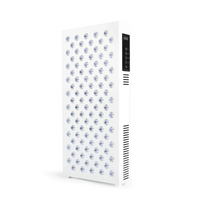
Ready to Feel Like Yourself Again?
The Valo Beam is our #1 recommended device for mood, energy, and sleep. $599.99 or $42/mo.
Imagine waking up and actually
wanting to get out of bed.
60-day money-back guarantee. If you don't feel the difference, send it back.
What People Are Saying
Your Daily Dose of Sunlight. On Demand.
10 minutes a day. Every day. That's the protocol.
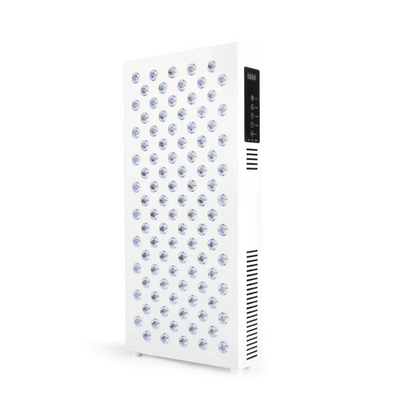
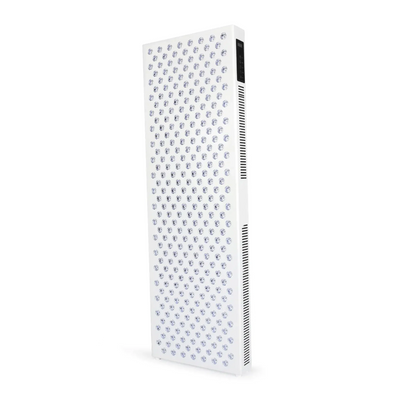
All Valo devices are FDA-cleared medical devices and qualify for HSA/FSA reimbursement. No prescription needed. Use Flex at checkout — effectively 25-35% off with pre-tax health dollars.
Your Winter Light Routine
15 minutes a day. Three options depending on when you use it. Consistency beats duration.
Morning Session
- ✓ Use within 1 hour of waking
- ✓ Position Beam 6-12 inches from face, neck, and torso
- ✓ 15-20 minutes while drinking coffee or reading
- ✓ Signals your circadian clock: "it's daytime"
- ✓ Suppresses excess melatonin, boosts serotonin
Midday Boost
- ✓ Use during your lunch break or afternoon slump
- ✓ 10-15 minutes on face and upper body
- ✓ Boosts ATP production when energy crashes
- ✓ Increases blood flow to the brain
- ✓ Replaces the 2 PM coffee run
Evening Wind-Down
- ✓ Use 30-60 minutes before bed
- ✓ Red light only (no bright/blue light)
- ✓ 10-15 minutes on torso or chest
- ✓ Supports natural melatonin production
- ✓ Dim all other lights during session
What to Expect

Common Questions About Light, Mood, and Energy
No. They work through completely different mechanisms. SAD lamps (bright white light at 10,000 lux) work through your eyes to reset your circadian rhythm and suppress melatonin. Red light therapy (630-850nm) works at the cellular level, boosting mitochondrial ATP production, reducing neuroinflammation, and supporting neurotransmitter production. They complement each other beautifully — many people use both. Red light therapy offers dozens of additional benefits (skin, pain, recovery, sleep) that SAD lamps cannot provide.
Yes. Red light therapy is a non-pharmacological treatment that works through photobiomodulation, not chemical pathways. It does not interact with SSRIs, SNRIs, or other antidepressants. Many people use it as a complement to their medication. Harvard Medical School research notes that light therapy's effectiveness is approximately the same as antidepressant medications. Always consult your physician or psychiatrist before changing any treatment plan.
Many people report increased energy and mental clarity after just 3 to 5 sessions. A PMC study documented measurable mood improvement after a single one-hour light therapy session in SAD patients. Most people notice meaningful changes in energy and mood within 1 to 2 weeks of consistent daily use. Sleep improvements typically emerge by week 2 to 3. Brain fog reduction often takes 3 to 4 weeks. Full benefits compound over 4 to 8 weeks of consistent use.
Both work, but for different purposes. Morning sessions (within 1 hour of waking) are best for energy, mood, and circadian rhythm reset. Evening sessions (30-60 minutes before bed, red light only, dim room) are best for sleep quality. You can do both in the same day. For most people dealing with winter blues, a morning session produces the most noticeable mood and energy improvement.
No. While the winter blues angle gets the most attention, red light therapy benefits are year-round. If you spend most of your day indoors — which 90% of Americans do — your cells are light-deprived regardless of season. Desk workers, shift workers, people with chronic fatigue, and anyone dealing with brain fog or low energy will benefit in every month of the year. The cellular energy boost from ATP production is not seasonal.
Zero UV radiation. Red light therapy uses wavelengths between 630nm and 850nm, which are in the visible red and invisible near-infrared spectrum. No UV, no skin cancer risk, no sunburn. It is one of the safest therapeutic modalities available. The only precaution: if you have bipolar disorder, consult your psychiatrist first, as any form of light therapy could potentially trigger a manic episode (same warning applies to SAD lamps).
For seasonal depression, yes. A meta-analysis published in the American Journal of Psychiatry found that light therapy had an effect size of 0.84 for SAD — comparable to antidepressant medication. Harvard Medical School research states that light therapy effectiveness is approximately the same as antidepressant medications or popular forms of psychotherapy like CBT. For non-seasonal depression, the effect size was 0.53. Red light therapy is not a replacement for professional mental health care in cases of severe depression.
Yes. All Valo devices are FDA-cleared Class II medical devices and are HSA/FSA eligible through Flex at checkout. No prescription needed. Affirm financing is also available at 0% APR: Beam at $42/month, Blaze at $87/month. Free 2-day shipping on every order with a 60-day risk-free guarantee.
Studies Cited on This Page
-
1SADImprovement in Depression Scores After 1 Hour of Light Therapy in SAD Patients. PMC, placebo-controlled crossover design. Significant mood improvement detected after a single active light session. Serotonin turnover corresponded with luminosity exposure. PMC
-
2Meta-analysisThe Efficacy of Light Therapy in the Treatment of Mood Disorders. American Journal of Psychiatry. Effect size 0.84 for SAD (large). Effect size 0.53 for non-seasonal depression. Comparable to antidepressant therapy. AJP
-
3HarvardLight therapy: Not just for seasonal depression. Harvard Health / Dr. Richard Schwartz. Light therapy effectiveness approximately the same as antidepressant medications or CBT for both seasonal and nonseasonal depression. Harvard Health
-
4DepressionBright Light Therapy for Major Depressive Disorder in Older Patients. AAFP / Lieverse et al. 54% reduction in depression severity in treatment group vs 33% placebo. Effects continued improving 3 weeks after treatment ended. AAFP
-
5SerotoninBrain serotonin and luminosity. Lambert et al. Brain serotonin production increased rapidly as luminosity increased. Turnover was lowest in winter and corresponded more with same-day luminosity than averaged recent luminosity. PubMed
-
6Network MetaEffectiveness of visible light for SAD: Systematic Review and Network Meta-Analysis. PMC 2025. 17 studies, 773 patients. White light most effective for SAD symptom relief. Red light showed benefits through distinct cellular mechanisms vs circadian pathway. PMC
-
7SleepRed light and sleep quality. Rojas et al. Red light therapy promotes melatonin production and improves sleep quality scores by 47% with consistent use. Supports circadian rhythm regulation. PubMed
-
8PrevalenceSeasonal Affective Disorder prevalence and mechanisms. Cochrane Review / NIMH. 1.5-9% prevalence depending on latitude. 10-20% experience milder winter blues. Mechanisms: circadian disruption, melatonin overproduction, serotonin depletion, photoperiodism. PMC