You didn't stop playing because you wanted to.
Your body just stopped letting you.
Stop Waiting to Heal.
Start Recovering Like a Pro.
The same wavelengths used by NFL teams, Olympic athletes, and sports medicine clinics — now in your home. Recover faster, reduce inflammation, and get back to doing what you love.
FDA-Cleared · HSA/FSA Eligible · 60-Day Money-Back Guarantee · Free Shipping
It's not just the injury.
It's everything the injury takes from you.
The old model of recovery — rest, ice, wait, repeat — was designed for a time when we didn't have anything better. Now we do.
Your cells already know how to heal.
They just need the energy to do it.
Red light therapy delivers specific wavelengths of light directly into damaged tissue — penetrating past skin and muscle into the cells that need to repair. It doesn't mask pain. It doesn't numb the area. It gives your body's own repair system the fuel to work faster.
Think of it this way: when you're injured, your cells are running on empty. They need ATP (cellular energy) to rebuild tissue, flush inflammation, and restore blood flow. Red and near-infrared light supercharges that process.
This is the same technology used by the San Francisco 49ers, Under Armour athlete programs, Olympic training facilities, and sports medicine clinics worldwide. The difference: now you can use it at home, every day, for the cost of a single PT session.

Ready to Recover Like a Pro?
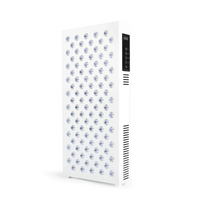
The Valo Blaze delivers 1,000W of clinical-grade power. Full-body coverage in 10 minutes. $1,299 or $87/mo.
From Torn ACLs to Tuesday Morning Back Pain
Whether you're a competitive athlete or just trying to move without pain, red light therapy helps.
Hamstring pulls, quad strains, calf tears — the most common athletic injury. RLT reduces inflammation at the injury site while accelerating collagen production and muscle fiber repair. Clinical studies show 50% faster return to play with consistent use. Treat before and after activity for prevention, or directly on the injury for recovery.
850nm near-infrared penetrates deep enough to reach the knee joint capsule, meniscus, and ligament tissue. Whether you're rehabbing post-surgery or managing ongoing patellar tendonitis, RLT reduces swelling, improves range of motion, and works synergistically with physical therapy to accelerate rehab timelines.
Ankle sprains, wrist sprains, shoulder separations. In a 2018 clinical trial, patients with acute ankle sprains treated with RLT reported significantly less pain after just 3 days. Light therapy reduces edema and inflammation in the acute phase while supporting connective tissue repair in the weeks that follow.
Tennis elbow, golfer's elbow, Achilles tendonitis, plantar fasciitis, rotator cuff tendinopathy. These chronic overuse injuries respond particularly well to RLT because they involve tissue that heals slowly due to limited blood supply. Near-infrared light increases circulation to hypovascular tissue — giving tendons what they need to actually repair rather than just manage.
80% of adults experience back pain at some point. Whether it's a herniated disc, sciatica, muscle spasm, or just years of sitting at a desk — the Beam's panel coverage lets you treat the entire lumbar region in one session. NIR light penetrates deep into paraspinal muscles, reducing the inflammation and muscle tension that drive most back pain.
Frozen shoulder, rotator cuff tears, impingement syndrome. The shoulder is the most mobile joint in the body — and one of the most vulnerable. RLT penetrates through the deltoid to reach the rotator cuff and glenohumeral joint. Users report improved range of motion and reduced night pain within 2-3 weeks of consistent treatment.
ACL reconstruction, rotator cuff repair, meniscus surgery, Achilles repair, hip replacement. Surgery is just the beginning. RLT before and after surgery reduces post-operative inflammation, accelerates incision healing, and reduces pain medication needs. It works synergistically with PT, amplifying the benefits of conventional rehab.
The runner's curse. Shin splints and stress fractures are caused by repetitive impact overloading bone and periosteal tissue. RLT stimulates osteoblast activity (bone-building cells) and reduces periosteal inflammation. Many runners use it preventatively before long runs and for recovery after.
Fibromyalgia, neuropathy, carpal tunnel, general stiffness, and systemic inflammation. RLT modulates the body's inflammatory response at the cellular level — reducing pro-inflammatory cytokines while increasing anti-inflammatory mediators. For people dealing with widespread pain that doesn't have one clear source, consistent full-body treatment with the Beam or Blaze provides the broadest benefit.
Pro Athletes Don't Use This Because It's Trendy. They Use It Because It Works.
Peer-reviewed data from real clinical trials.
What People Are Saying
Match Your Training to the Right Device
Same medical-grade wavelengths. Different coverage for different athletes.
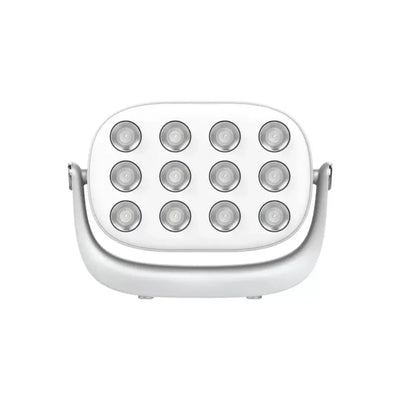
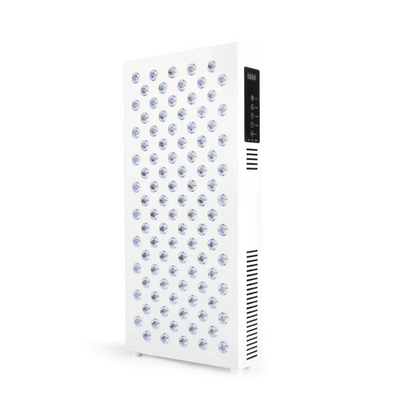
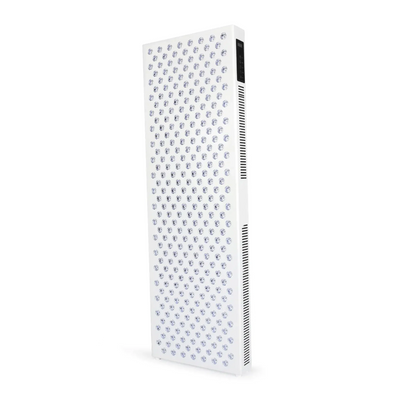
All Valo devices are FDA-cleared medical devices and qualify for HSA/FSA reimbursement. No prescription needed. Use Flex at checkout — effectively 25-35% off with pre-tax health dollars.
This is what getting back feels like.
60-day money-back guarantee. If you don't feel the difference, send it back.
Why Everything You've Tried Hasn't Worked.
Dr. Roosta explains why ice, rest, and painkillers don't heal — and what actually does.

Sports Recovery FAQ
Yes. Red light therapy (photobiomodulation) is used by NFL teams including the 49ers, Olympic training centers, Under Armour athlete programs, and sports medicine clinics worldwide. Valo devices deliver the same clinical-grade wavelengths (660nm + 850nm) and power densities used in professional settings — at a fraction of the cost.
Both. Before exercise, RLT primes your muscles by increasing blood flow and cellular energy — reducing injury risk. After exercise, it accelerates recovery by reducing DOMS, lowering CK markers, and flushing inflammation. Research shows the biggest benefit comes from treating before exercise, but both protocols are effective.
Absolutely — and your PT will likely encourage it. RLT works synergistically with physical therapy, amplifying the benefits of conventional rehab. Many physical therapy clinics already use photobiomodulation as part of their treatment protocols. Using a Valo device at home means you get the benefit every day, not just during PT sessions.
For acute injuries and post-workout soreness, many users notice reduced swelling and pain within the first few sessions. For chronic conditions like back pain or tendonitis, expect meaningful improvement over 2-4 weeks of consistent daily use. The clinical studies showed 50% faster return to play, with the biggest gains emerging over the first 10 days.
The Beam ($499) is our #1 bestseller for athletes — it covers large muscle groups and joints in a single session. For serious athletes training 4+ days a week, the Blaze ($1,299) provides full-body coverage. The Spark ($299) is perfect for targeted treatment of specific injuries and is portable enough for the gym bag.
Yes. RLT is effective for both sports injuries and general pain conditions — back pain, knee arthritis, shoulder impingement, chronic inflammation, plantar fasciitis, carpal tunnel, and more. The Beam is ideal for back pain due to its wide panel coverage.
Yes. All Valo devices are FDA-cleared medical devices and qualify for HSA/FSA reimbursement. No prescription needed. Select "Flex" at checkout. Affirm financing is also available at 0% APR.
Every Valo device comes with a 60-day money-back guarantee. Use it every day for 60 days. If you don't feel a meaningful difference — send it back for a full refund. No questions asked, no restocking fees.
Your body already knows how to come back. Give it the signal.
You've tried rest. You've tried ice. You've tried waiting. What you haven't tried is giving your cells the energy they need to actually repair. 10 minutes a day. No pills, no needles, no downtime. Just light — and the recovery it unlocks.
Studies Cited on This Page
-
1Sports830nm LED phototherapy significantly reduced return-to-play in injured university athletes. Foley et al., Laser Therapy 2016. 395 injuries, 53 types, 65 athletes. Mean RTP: 9.6 days vs 19.23 days conventional. VAS pain scores dropped up to 6 points in 2 sessions. PMC
-
2PerformancePhotobiomodulation in human muscle tissue: an advantage in sports performance? Ferraresi et al., J Biophotonics 2016. Systematic review of RCTs. 13.2% performance improvement, 22% CK reduction, 2.1x faster recovery. Cohen's d = 0.84. PMC
-
3Knee OAImprovement of pain and disability in elderly patients with degenerative osteoarthritis of the knee. PubMed. Pain reduction more than 50% in red and infrared groups vs placebo. Self-applied treatment, 15 min twice daily for 10 days. PubMed
-
4ArthritisThe Mechanisms and Efficacy of Photobiomodulation Therapy for Arthritis. PMC Comprehensive Review 2023. PBM reduces pain, swelling, and morning stiffness. 170-patient RA study showed pain attenuation up to 90%. PMC
-
5SwellingPhotobiomodulation for knee OA. Clinical Rehabilitation 2021. 62% reduction in joint swelling with PBM vs placebo. Statistically significant reductions in VAS pain and morning stiffness. PubMed
-
6TendonRed light therapy for tendinopathy. Brazilian study 2018. 780nm red light improved collagen organization in muscles and tendons. Double-blind RCT for tennis elbow showed significant pain reduction vs placebo. PubMed
-
7PainMechanisms and Pathways of Pain Photobiomodulation. PMC Narrative Review. Red and NIR light used for knee OA, complex regional pain, neuropathic pain, inflammatory pain, TMJ, and post-surgical pain. Short exposure duration (seconds to minutes). PMC
-
8DOMSEffect of phototherapy on delayed onset muscle soreness. Douris et al., Photomedicine and Laser Surgery. Pre-exercise PBM reduces DOMS by up to 50%. Decreased creatine kinase levels (muscle damage marker) at 24h and 48h post-exercise. PubMed